• Finally a quiet morning after the kids are gone to school. I’m sitting here with a fresh pot of coffee, the aroma filling the room as I look over the notes from yesterday’s FOMC event.

    To be honest, it was a “quiet” affair—at least by the standards of the last few years. There wasn’t that frantic clicking of keys or the collective breath-holding we’ve grown used to. Most of us in the room already knew where the needle would land on the rate cut. That predictability gave me a rare moment of peace; I actually had time to take a proper first sip of my coffee before Chairman Powell took the podium.

    In the previous last several events, tuning into an FOMC presser felt like I’d just downed a double-shot of espresso on an empty stomach and I’d be bracing for a high-intensity shock to the market. This time, my internal state was entirely different. If those past sessions were my “Red Bull” phase—all jitters and palpitations—yesterday felt like a smooth Iced Matcha Latte with a touch of vanilla. It was balanced, refreshing, and for once, I didn’t feel like I was vibrating out of my chair.

    The Goldilocks Consensus: Interpreting the “Vanilla” Fed
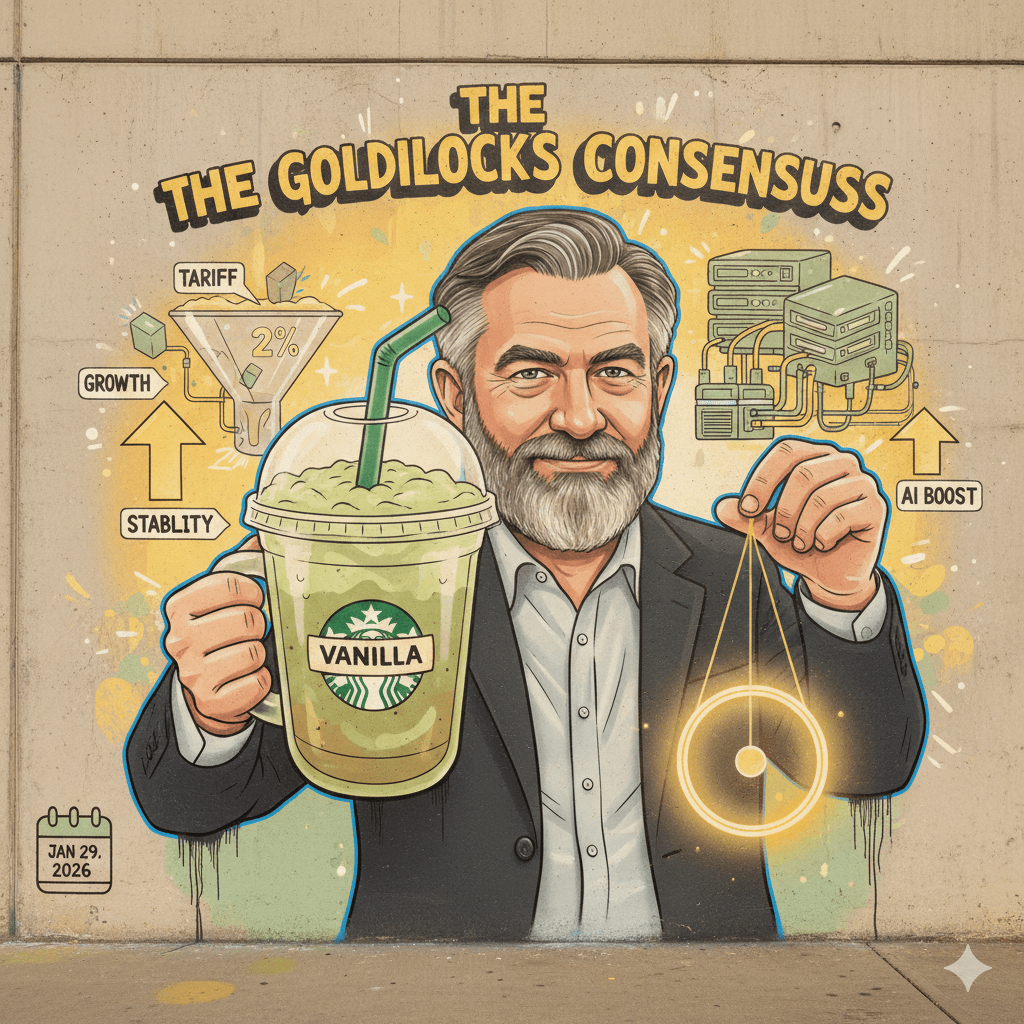
    In the world of macroeconomics, we often chase “Goldilocks”—a state where the economy isn’t too hot to cause runaway inflation, nor too cold to trigger a recession. Yesterday, Jerome Powell didn’t just find that bowl of porridge; he sat down and had a meal.

    1. The Strategic Hold: Why 3.5% is the New “Just Right”

    The Fed’s decision to maintain the benchmark rate at 3.5% to 3.75% was the definition of professional calm. Powell’s thesis is clear: the current policy is working. By holding steady, the Fed is effectively supporting a robust labor market while gently steering inflation back toward its 2% North Star. He’s no longer swinging a sledgehammer; he’s using a tuning fork, checking the economic vibrations meeting-by-meeting.

    2. The “Tariff Filter”: Seeing the Real 2%

    The most fascinating takeaway from this session—the “vanilla” sweetness, if you will—is how we should be reading inflation. On the surface, Core PCE sits at 3.0%. However, Powell pointed out a critical distinction: much of that “extra” 1% is a direct byproduct of tariffs.

    Unlike traditional inflationary cycles driven by spiraling wages or demand, tariff-driven price hikes are largely one-time events. Once the market absorbs the cost, the upward pressure dissipates. When you filter out these artificial “noise” factors, the underlying inflation rate is essentially at the Fed’s 2% target. To me, this is the ultimate green light.

    3. The Death of the “Tail Risks”

    For months, the “Bear” narrative has relied on two ghosts: the threat of more rate hikes and the looming shadow of a recession. Yesterday, Powell essentially performed an exorcism on both:

    • No Hikes: He explicitly stated that a rate increase is currently “no one’s base scenario.”
    • No Recession: With GDP growth tracking between 4% and 5%, the U.S. economy isn’t just surviving; it’s thriving.

    4. AI: The Economic Amplifier

    Powell didn’t shy away from the “A-word.” He acknowledged that while AI might cause short-term shifts in the labor market, its role as a productivity amplifier is undeniable. It is the engine under the hood of this expansion, allowing for growth without the typical “overheating.”

    The Closing Sip

    After the speech, my coffee has gone from hot to that perfect, drinkable temperature. It’s a good metaphor for where the market is at right now. The scalding heat of 2022 and 2023 is gone. The bitter cold of a “hard landing” never arrived.

    In this “Iced Matcha” economy, the strategy would be to stay the course. Market volatility is inevitable, and we’ll surely see a few dips throughout 2026. But when I look at the fundamental harmony Powell described, those dips aren’t warnings to flee; they are invitations to participate.

    The Fed has laid out a clear, stable path. My “Red Bull” days of checking the ticker every five minutes with a racing heart are, hopefully, in the rearview mirror. So, I’m gonna take a breath, trust the fundamentals, and perhaps, next time might be English tea, maybe not. The outlook seems clearer than it’s been in years.

    Hoping 2026 is the year to breakthrough.


    Disclaimer:I’m an avid coffee drinker, not a fortune teller. While the “Matcha” vibes are currently high, please remember that the stock market is occasionally prone to behaving like a toddler on a sugar rush—unpredictable, loud, and prone to sudden tantrums (but I love it though, sometimes). This analysis is for informational & personal purposes; please consult with a financial advisor before betting your entire “latte fund” on a single green candle. Caffeine was harmed in the making of this article; your capital should be treated with more care.
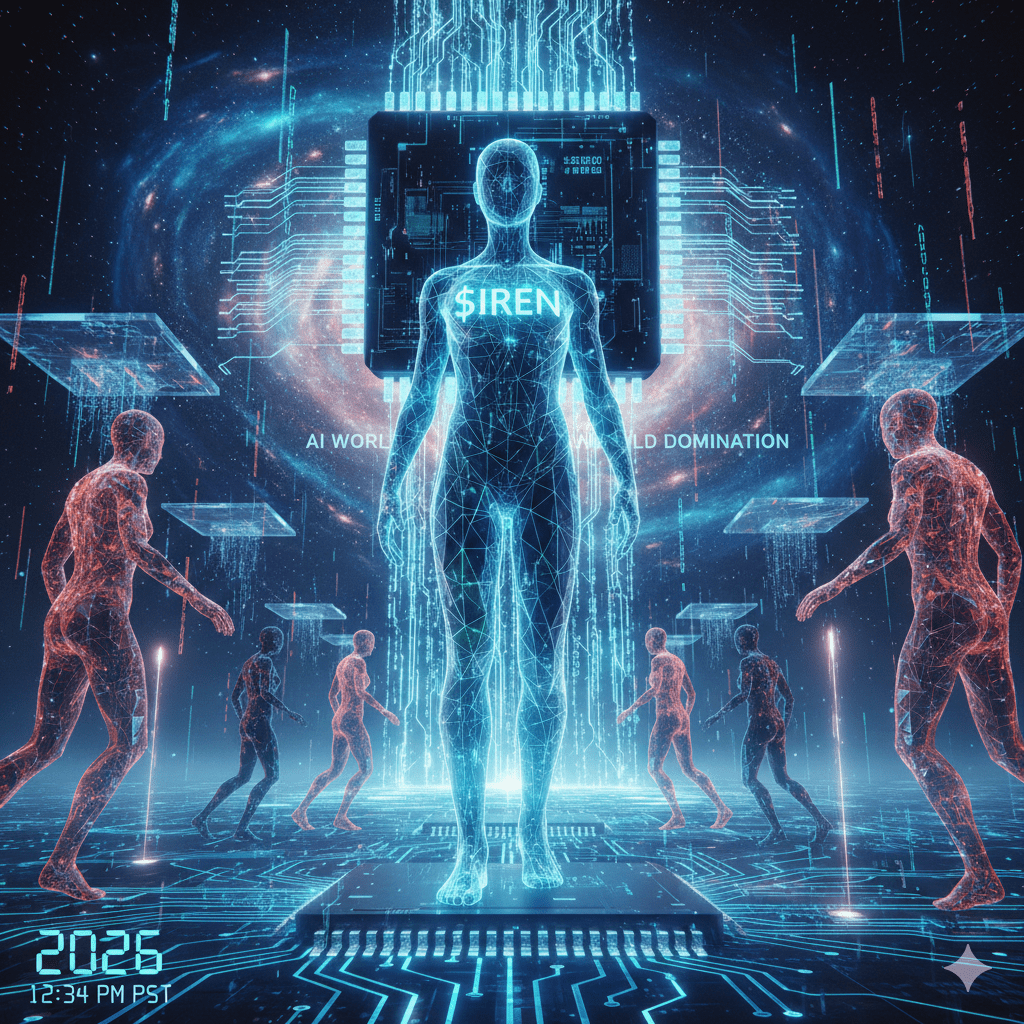
  • This investment report provides a comprehensive narrative analysis of the structural shifts in the U.S. data center industry and an evaluation of IREN (Iris Energy) as a primary beneficiary of the emerging “Power Scarcity” era.

    STATUS: $59.99 at closing on Jan. 27th 2026

    The AI Power Paradigm Shift & IREN (Iris Energy) Analysis

    1. The Great Power Paradigm Shift: From Variable Expense to Long-Term Debt

    The fundamental business model of the AI data center is undergoing a radical transformation as electricity transitions from a simple utility into a significant financial liability. Historically, data center operators viewed power as a variable operational expense—a “pay-as-you-go” system where costs were only incurred during active consumption. However, a new regulatory environment is emerging, driven by the White House and the Department of Energy, which introduces a 15-year fixed variable into this equation. This change is designed to protect residential consumers and existing industries from the rising costs associated with the massive energy demands of AI.

    The PJM Interconnection, which serves over 67 million people across 13 states and Washington D.C., is now facing immense pressure to implement “Emergency Power Auctions.” Under these proposed rules, data center developers must essentially provide financial guarantees for the construction of new power plants. This creates a “take-or-pay” scenario where the data center is obligated to pay for power infrastructure for 15 years, regardless of whether the facility is fully operational or if the AI boom eventually cools. Consequently, electricity is no longer just an operating cost; it has become a form of long-term debt that dramatically elevates the break-even threshold for new market entrants.

    2. The Failure of the “Self-Generation” Escape Hatch

    As the traditional power grid becomes increasingly congested and expensive, several high-profile tech firms have attempted to bypass these hurdles through self-generation. A notable example is Elon Musk’s xAI, which utilized mobile gas turbines to power the “Colossus” data center in Memphis. However, the window for such “workarounds” is rapidly closing. Regulatory bodies, led by the EPA, have recently clarified that any power generation used for data centers—whether mobile or temporary—will be subject to the same stringent environmental standards and public hearing processes as permanent power plants.

    This regulatory crackdown creates a massive time barrier. While a developer might assume they can simply buy their own turbines, the lead time for hardware from dominant suppliers like GE Vernova has stretched to between three and five years. When combined with a two-to-three-year permitting and environmental review process, the “time-to-market” for new data centers is becoming a multi-year ordeal. This highlights the “cost of time,” where a company with hardware but no power can see hundreds of millions of dollars in value evaporate as their equipment sits idle in warehouses.

    3. Comparative Market Analysis: Power Capacity Moats

    The following table compares IREN with key competitors mentioned in the industry analysis, focusing on their current operational footprint versus their long-term power pipelines.

    CompanyActive/Near-Term Power (MW)Total Secured Pipeline (MW)Key AI/HPC Partnerships
    IREN (Iris Energy)~810 MW (FY2025 End)~3,000 MWMicrosoft (9.7B Contract)
    CoreWeave~590 MW (Q3 2025)~2,900 MWNvidia, Meta, OpenAI
    Cipher Mining~300 MW (Phase 1)~3,400 MWAWS (Amazon), Google
    Bitfarms~341 MW (Current)~2,100 MWPivot in progress (HPC conversion)

    Data compiled from recent SEC filings and January 2026 industry outlooks.

    4. IREN: Leveraging the “Time Moat” and Institutional Validation

    In this landscape of scarcity, IREN possesses an economic moat defined by immediate availability. The company has already secured 2,910 MW of power capacity and the land required to utilize it across sites in Texas and British Columbia. To put this in perspective, this capacity is equivalent to the output of approximately three nuclear reactors, a scale that is nearly impossible to replicate in the current regulatory environment.

    The strategic value of these assets was recently validated by Microsoft’s multi-billion dollar commitment to IREN. This partnership acts as a “seal of approval,” signaling that IREN’s infrastructure meets the rigorous technical standards required by the world’s most demanding AI workloads. Furthermore, IREN’s execution remains a standout feature in an industry plagued by delays. While many competitors struggle with transformer shortages or permit denials, IREN has maintained a consistent construction schedule for its major projects, such as Horizon 1-3, proving their ability to convert secured power into operational revenue.

    5. Strategic Financial Outlook and Path to 2026

    IREN’s management has set an ambitious target of reaching a $3.4 billion annualized revenue run rate by the end of 2026. While the existing Microsoft contract and the company’s bitcoin mining operations provide a strong foundation, there is still a requirement for an additional 200 MW of power contracts to reach the ultimate goal of supporting 140,000 GPUs. The market is currently in a state of anticipation, looking for the specific contract disclosures that will fill this gap.

    The investment thesis for IREN rests on the fact that they are already “behind the fence” of the power grid. As PJM and other grid operators begin to prioritize residential stability and implement curtailment policies—where they can forcibly shut off data center power during peak hours to prevent blackouts—the value of IREN’s established, reliable power connections increases. For IREN, the upcoming earnings cycles represent a critical period where the transition from a “mining company” to a “tier-1 AI infrastructure provider” is expected to be fully realized through further high-value enterprise contracts.

    _______________________________________________________________________________________________

    Investment Disclaimer: This report is provided for informational and educational purposes only and does not constitute financial, investment, legal, or tax advice. The analysis contained herein is based on specific video sources and publicly available information as of January 2026; however, its accuracy, completeness, and reliability cannot be guaranteed.

    Investing in high-growth sectors such as AI infrastructure, data centers, and cryptocurrency mining involves a high degree of risk and potential volatility. Past performance is not indicative of future results. The “forward-looking statements” regarding IREN (Iris Energy)—including revenue targets, power capacity projections, and construction schedules—are based on current expectations and are subject to significant market, regulatory, and technical uncertainties.

    Before making any investment decisions, you should conduct your own thorough due diligence and consult with a qualified, licensed financial advisor. Use of this information is at your own risk.

  • The Capacity Gap: A Personal Realization

    My children are officially outrunning me.

    As they grow, their energy isn’t just increasing; it’s accelerating. They want to play longer, run faster, and push further. For a while, I struggled to keep pace. I had settled into a comfortable routine, neglecting my own “power plant” until the physical demands of my kids’ growth forced a reckoning. I realized that having enough energy isn’t a luxury—it is the fundamental requirement for participating in the life I want to lead.

    This personal friction—the gap between what is demanded and what can be supplied—is the exact crisis currently facing the global economy.

    Just as my children have shifted into a new gear of activity, Artificial Intelligence has entered an explosive stage of development. We are still in the “early childhood” of AI, yet its appetite for power is already staggering. While the world was comfortably settling into existing energy patterns, AI arrived with a thunderous demand: “GIVE ME MORE ENERGY!” Our current infrastructure, much like my fitness level a few months ago, simply wasn’t prepared for this level of consumption.

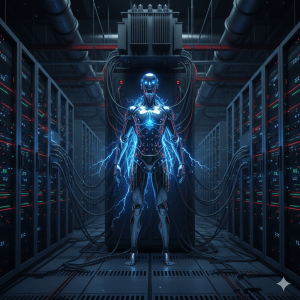
    AI humanoid standing in the middle of inside of a data center warehouse, getting charged up

    1. AI as a Physical Energy Factory

    AI is no longer just a digital tool; it is a massive physical consumer of power.

    • Massive Infrastructure: Upcoming AI data centers (expected by 2026) will consume power on the scale of entire small cities.
    • The Cost of Interaction: Every AI-generated response, image, or video requires a significant burst of energy from power plants.
    • Global Demand Shock: If global AI usage continues to scale toward 24/7 adoption by billions of people, current power grids will face an inevitable “Energy Shock.”

    2. The Paradox of Efficiency (Jevons Paradox)

    A common misconception is that better technology reduces energy use. In the AI sector, the opposite is true:

    • Increased Frequency: As AI chips become more efficient and costs drop, people use AI for more frequent and smaller tasks.
    • Exponential Growth: While individual chips use less power per task, the total global consumption is exploding because the technology is being adopted everywhere at once.

    3. Infrastructure Bottlenecks & “Super Providers”

    The primary hurdle isn’t just generating power; it’s delivering it.

    • Outdated Grids: The infrastructure required to move electricity to data centers (transformers and power lines) is aging and insufficient.
    • Supply Chain Delays: Sourcing critical grid components can take years, creating a major bottleneck for AI expansion.
    • The Rise of “Super Caps”: Companies that control the power grid or offer stable electricity now hold immense pricing power.

    Conclusion: The Playground of the Future

    Back on the home front, my “infrastructure project” is ongoing. I’m back in running (or at least I’ve been trying), trading my sedentary habits for stamina, all so I don’t have to call a “timeout” five minutes into a game of tag. It’s a work in progress—some days I feel like a high-tech turbine, and other days I feel like a 19th-century coal plant with a literal “exhaust” problem.

    There is a certain hope in this: just as I am capable of rebuilding my own capacity to meet my kids’ demands, the world is capable of rebuilding the grid. We are seeing a historic reinvestment in nuclear, fusion, and smart-grid tech that could lead to a golden age of abundance.

    However, there is a touch of concern. My kids don’t care about my five-year fitness plan; they want to play now. Similarly, AI development isn’t waiting for the utility companies to finish their environmental impact studies or for the supply chain to deliver more transformers. We are currently in the “toddler tantrum” phase of AI energy demand—where the need is immediate, loud, and non-negotiable. If we don’t bridge this capacity gap soon, the “playtime” of digital innovation might face some very dark, very literal, outages.

    The Final Thesis: In the economy of 2026 and beyond, the “Golden Goose” is AI, but the most valuable asset is the “feed.” While others chase the flashiest software, the smart investor looks to the source. Energy is no longer just a utility; it is the fundamental currency of the modern world. Those who control the flow of electrons will hold the keys to the kingdom.


    Disclaimer: This report is for informational purposes only and does not constitute financial, investment, legal, or tax advice. The “Energy—The True Currency” report reflects the analytical views of the authors as of January 2026 and is subject to change without notice. Investing in AI infrastructure and energy sectors involves significant risk, including the potential loss of principal. Past performance of energy stocks or tech utilities is not indicative of future results. Readers should consult with a qualified financial advisor before making any investment decisions. The authors may hold positions in the securities or sectors mentioned herein.

  • The image functions as a symbolic representation of the "Slope of Enlightenment"—the phase of the Gartner Hype Cycle where technology finally matures into a beneficial, integrated part of daily life.

Visual Conclusion: It brings the report's personal narrative full circle by depicting the "happy vibe" of a future where AI and humanity coexist harmoniously.

Narrative Connection: It directly reflects the author's reflections on their children's growth, showing a world where the next generation interacts safely and joyfully with advanced technology.

Balanced Perspective: After detailing the "Trough of Disillusionment" and the harsh ROI demands of 2026, this image provides the "Utopia-esque" counterpoint, showing the potential long-term reward for patient, observant investors.

Atmospheric Detail: By blending present-day aesthetics with slightly more futuristic elements—such as drones and advanced humanoids in a park-like setting—it visualizes the report's theme of a "tilted balance of life" that has finally stabilized into something positive.

    Introduction: The Velocity of Change

    Artificial Intelligence remains the definitive narrative of our era. Since the debut of ChatGPT, humanity has effectively crossed the threshold into uncharted territory. While experts offer a spectrum of forecasts, one reality is certain: the equilibrium of our daily lives has fundamentally tilted.

    As an observer of both markets and life, I find a striking parallel between the trajectory of AI and the growth of my own children. They seem to transform every few months, evolving so rapidly that I often fear missing the fleeting moments that define their childhood. I find myself trying to soak up every second, aware that once a moment passes, it is gone.

    AI development mirrors this relentless pace. To look away, even briefly, is to risk falling behind as the impact of the technology expands exponentially. In both parenting and portfolio management, every moment in this current stage is pivotal. For the retail investor, the challenge is clear: How do we prepare for a revolution that moves faster than our traditional systems of evaluation?

    The Bridge: From Parental Instinct to Market Logic

    This sense of urgency isn’t just a personal sentiment; it is a necessary framework for survival in today’s economy. Just as a parent must stay attuned to a child’s rapid development to provide the right guidance, an investor must look past the “noise” of the AI revolution to identify its actual maturity.

    We are moving out of the “infancy” of AI—the phase of pure wonder and unchecked growth—and into an “adolescence” defined by harsh realities and the demand for real-world responsibility. The transition is a period where the initial “cuteness” of experimental technology fades, and we begin to ask what it can actually produce. In 2026, this shift is manifesting as a pivot from blind faith to a data-driven demand for performance.

    Executive Summary

    As of January 2026, the global equity market is entering a cooling-off phase known as the “Trough of Disillusionment.” Following the speculative fervor of 2023–2025, the market has stopped rewarding “potential” and started demanding “performance.” This report outlines the shift from hype-based valuations to ROI-driven fundamentals.

    1. The Maturity Cycle: From Hype to ROI

    The era of “blind investment” has concluded. While AI investment is projected to rise by 44% year-over-year, the market’s tolerance for high-burn, low-yield AI projects is at an all-time low.

    • The ROI Mandate: 2026 is the year of “Show Me the Money.” Investors are pivoting toward companies that can prove a concrete Return on Investment (ROI).
    • The Trough of Disillusionment: We are currently navigating the period where initial excitement meets the hard reality of high implementation costs, regulatory friction, and technical bottlenecks.

    2. The Infrastructure Bottleneck: Energy and Politics

    A significant shift in 2026 is the intersection of AI infrastructure and political liability. As data centers consume record-breaking amounts of power, the “AI tax” is beginning to hit the average citizen’s utility bill.

    Political & Social Pressure

    • Cost Absorption: In a major election cycle, there is mounting pressure on Big Tech to absorb rising energy costs. Leaders like Microsoft have already pivoted to “Community First” strategies, promising to fund local power infrastructure to prevent residential rate hikes.
    • Resource Management: Beyond electricity, water usage for cooling has become a flashpoint. Companies are now being held accountable for “net-positive” water replenishment in the communities where they operate.

    Financial Transparency

    • Debt Scrutiny: The capital-intensive nature of building the “AI Brain” is straining balance sheets. Legal challenges, such as those facing Oracle regarding debt disclosure for data center expansion, suggest that transparency will be a key driver of stock volatility this year.

    3. Sector Analysis: Winners and At-Risk Verticals

    SectorOutlookStrategic Driver
    SemiconductorsOverweightContinued demand for hardware “shovels”; early 2026 gains of 10%+.
    Energy & UtilitiesOverweightNuclear, hydrogen, and ESS (Energy Storage) are the new growth engines.
    Legacy SaaSUnderweightHigh risk of being replaced by direct AI automation (e.g., Adobe, Intuit).
    Big Tech (Cloud)NeutralMassive Capex spend is currently a drag on short-term free cash flow.

    4. The Power Shift: The Google-Apple Alliance

    Perhaps the most pivotal development of early 2026 is the formal integration of Google Gemini as the foundational intelligence for Apple’s mobile ecosystem.

    • Software Monopoly: This deal effectively grants Google a near-monopoly on mobile AI, positioning its “brain” within both Android and iOS devices.
    • Market Implications: While this is a massive win for Google, it has triggered intense anti-trust concerns and competitive counter-moves from rivals like Elon Musk, who view this concentration of power as a threat to the open internet.

    5. Tactical Recommendations for the Retail Investor

    1. Follow the Energy: Invest in companies providing the physical power and cooling required for AI to exist.
    2. Monitor the ROI: Avoid companies that are “AI-washing” their marketing without showing revenue growth or cost savings.
    3. Embrace Volatility: Use the “Trough of Disillusionment” to accumulate shares in dominant infrastructure players when the market overreacts to short-term cost spikes.

    Conclusion: The Anchor in the Storm

    Returning to the image of my children, I am reminded that growth—real, lasting growth—is never a straight line. It is a series of leaps and plateaus, of “troughs” where the work of maturing happens out of sight. Just as I must be present for every stage of my kids’ lives to truly understand who they are becoming, we as investors cannot afford to look away during this disillusionment phase.

    We may be in uncharted territory, but our anchor remains the same: a focus on value, a commitment to monitoring the details, and the patience to wait for the “slope of enlightenment.” The impact of AI will only get bigger while we aren’t looking, so let’s make sure we keep our eyes open, soaking up the data just as we soak up the moments that matter. The revolution has started, and while we can’t predict every turn, we can choose to be the investors who stay in the room for the whole story.


    Note: This report is intended for informational purposes and should not be considered formal financial advice. Market conditions in 2026 are subject to rapid change based on geopolitical and technological developments.

  • This report presents an integrated investment thesis for Bitmine Immersion Technologies (BMNR), synthesizing data from the latest strategic updates and comparing its model to the industry standard, MicroStrategy.

    Status: $29.35 (Market Close, Jan 21st, 2026)

    I. Executive Summary

    Bitmine has evolved into the world’s premier Ethereum Digital Asset Treasury (DAT).1 Unlike traditional holding companies, Bitmine is executing a three-pillar strategy: Massive Asset Scarcity (targeting 5% of global ETH supply), Operational Monetization (via the MAVAN validator network), and Global Audience Ownership (via Beast Industries). The company’s overarching objective is to achieve S&P 500 inclusion by 2027 by proving that its staking rewards and venture investments constitute “operational income” rather than passive treasury gains.

    II. Core Strategic Pillars

    1. Strategic Liquidity & Share Expansion

    In January 2026, Bitmine increased its authorized shares from 500 million to 50 billion.2 This 100x expansion is a “war chest” designed for:

    • M&A Currency: Acquiring cash-flow-positive fintech or infrastructure firms to bolster “operating income” for index requirements.
    • ETH Accretion: Using equity at a premium to Net Asset Value (NAV) to acquire Ethereum, aiming for the “Alchemy of 5%” (5% of total supply).3
    • Capital Market Flexibility: Preparing for massive capital inflows as Ethereum enters an institutional “supercycle”.
    2. The MAVAN Engine: Monetizing the Treasury

    The Made in America Validator Network (MAVAN) is the core operational engine that distinguishes Bitmine from an ETF.4

    • Transformation: Converts passive ETH holdings into active infrastructure.5 Bitmine acts as a network security provider, not just a holder.
    • Revenue Scale: With ~4.14 million ETH, MAVAN is projected to generate ~$374 million in annual revenue (at a 2.81% CESR yield), exceeding $1 million per day.6
    • Accounting Advantage: By operating its own nodes, Bitmine labels these rewards as “Security Service Fees,” creating a legal path to be recognized as an operating business by index providers like S&P and MSCI.
    3. Strategic Expansion: Beast Industries

    Bitmine’s $200 million investment in MrBeast’s company serves as a massive Customer Acquisition Cost (CAC) hedge.7

    • Marketing Ownership: Instead of spending billions on stadium naming rights (like past crypto firms), Bitmine owns equity in a channel with 450 million subscribers.
    • Future Vertical: Integration of DeFi and staking services into MrBeast’s upcoming financial platforms, providing an instant, global retail funnel.

    III. Comparative Analysis: Bitmine (BMNR) vs. MicroStrategy (MSTR)

    Bitmine is frequently called the “Ethereum MicroStrategy,” but their financial architectures differ fundamentally:

    FeatureBitmine (BMNR)MicroStrategy (MSTR)
    Core AssetEthereum (ETH) – Staking YieldBitcoin (BTC) – Store of Value
    Operating ModelDigital Infrastructure / VC (MAVAN)Enterprise Software / BTC Proxy
    Yield MechanismActive Yield: Staking rewards (~3% APR)BPS Growth: “Bitcoin-per-share” growth via debt issuance
    Cash FlowOperational Cash Flow: $1M+/day from stakingNegative/Neutral: High interest on debt vs. software revenue
    Debt ProfileLow: ~$102M in liabilities; high cash reservesHigh: ~$8B in convertible debt
    Index StrategySeeking S&P 500 via operational profitSeeking to stay in MSCI/S&P via mNAV premium
    Key Takeaway:

    While MicroStrategy relies on Financial Engineering (issuing debt to buy BTC), Bitmine relies on Operating Engineering (using MAVAN to generate yield from ETH). This makes BMNR potentially more resilient during downturns due to its lower debt load and consistent daily staking income.8

    IV. The Path to S&P 500 Inclusion

    The “Shadow Easing” strategy and the shift toward operational revenue are tactical moves to satisfy the S&P 500’s “four consecutive quarters of positive earnings” requirement.

    1. Staking as Revenue: MAVAN rewards are presented as service income.
    2. Venture Gains: The “Moonshot” program (limited to 5% of assets) targets high-growth tech companies to boost the bottom line.
    3. Governance: The board’s “Wall Street DNA”—including executives from Fundstrat and major investment banks—ensures institutional-grade reporting and compliance.

    V. Risk Assessment

    • ETH Volatility: BMNR’s net income is highly sensitive to Ethereum price swings due to fair-value accounting.9
    • Dilution: The 50B share cap allows for significant dilution if management mismanages the issuance timing.
    • Regulatory Scrutiny: The “Shadow Easing” and quasi-bank status of stablecoin/staking initiatives could face SEC pushback.

    VI. Conclusion

    Bitmine Immersion Technologies is no longer a mining company; it is a Tier-1 Financial Institution for the Digital Era. By combining the scarcity of 5% of the ETH supply with the operational cash flow of MAVAN and the distribution power of MrBeast, Bitmine is creating a unique, defensible moat that standard crypto ETFs cannot replicate.

    DISCLAIMER: This report is for informational purposes only and does not constitute financial advice. Investing in Bitmine (BMNR) involves high risk, including the potential for significant loss of capital due to cryptocurrency volatility and corporate dilution.15 Consult a licensed financial professional before making any investment decisions.

  • The markets had been a long, cold shadow for most of the day, dipping sharply with a heavy, leaden finality. Then, in the final hour, something shifted—not a roar, but a quiet change in the wind—and the numbers began to climb back up, ending the day with a gain so miniscule it felt more like a clerical error than a victory. It was mostly the Greenland fiasco, one of those strange, surreal headlines from the Trump administration that makes you feel as if you’ve stepped into a world with two moons.

    Many of my major positions had been shaken loose during the dip, and I spent the evening reshuffling weights and moving funds, like a man trying to reorganize a library in the dark. Sometimes I wonder how much of a difference I really make, sitting here monitoring charts and making adjustments to individual stocks. I remind myself that I am still learning, that it hasn’t even been a year since I began this dance. But even the experts—the men who have lived in this game for decades—speak in a chorus of contradictions. Some say you should never sell, only keep buying until the world ends. Others say that holding a declining stock is a test of character. As Mark Hanna says in The Wolf of Wall Street:

    “Number one rule of Wall Street. Nobody — and I don’t care if you’re Warren Buffet or if you’re Jimmy Buffet — nobody knows if a stock is going to go up, down, sideways or in circles.”

    It is a confusing sort of music, but as I sat there watching the final tickers fade, I realized that these contradictions aren’t just noise. They are the gears of a much larger, invisible machine. We think we are making choices, but we are often just responding to the turn of a distant wind-up bird.

    The Wind-Up Bird and the Election Tide

    There is a judge waiting at the end of this year, a judgment on everything that has been built since the administration first took power. To ensure the verdict is kind, the people behind the curtain are working to make sure the floor never falls out from under us. They are propping up the market with the same desperate, late-night tension found in Margin Call. As Will Emerson says in the film:

    “The only reason that they all get to continue living like kings is because we got our fingers on the scales in their favor. I take my hand off, and then the whole world gets really fuckin’ fair really fuckin’ quickly, and nobody actually wants that.”

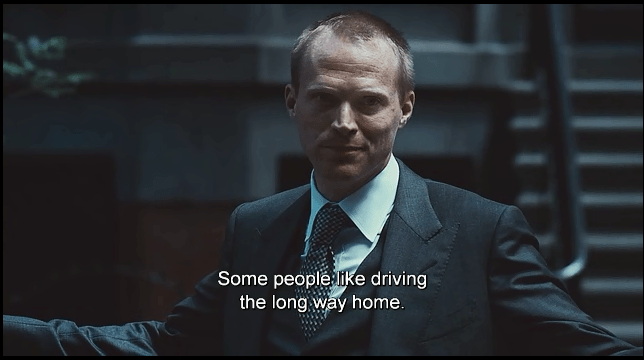
    If you look closely at the trade deals, the harsh, cold edges of the high tariffs have begun to soften, like a piece of wood worn smooth by the sea. The nominal 20% tariff that everyone feared has quietly settled into a real rate of 10.7%, a number reached through the quiet, back-room negotiations that favor stability over spectacle. It reminds me of the secretive, calculated power portrayed in Vice—the kind of quiet man who waits for the right moment to strike. When the world asks if the cost is worth it, the answer is often a cold, single word: “So?”

    Shadow Easing: The Invisible River

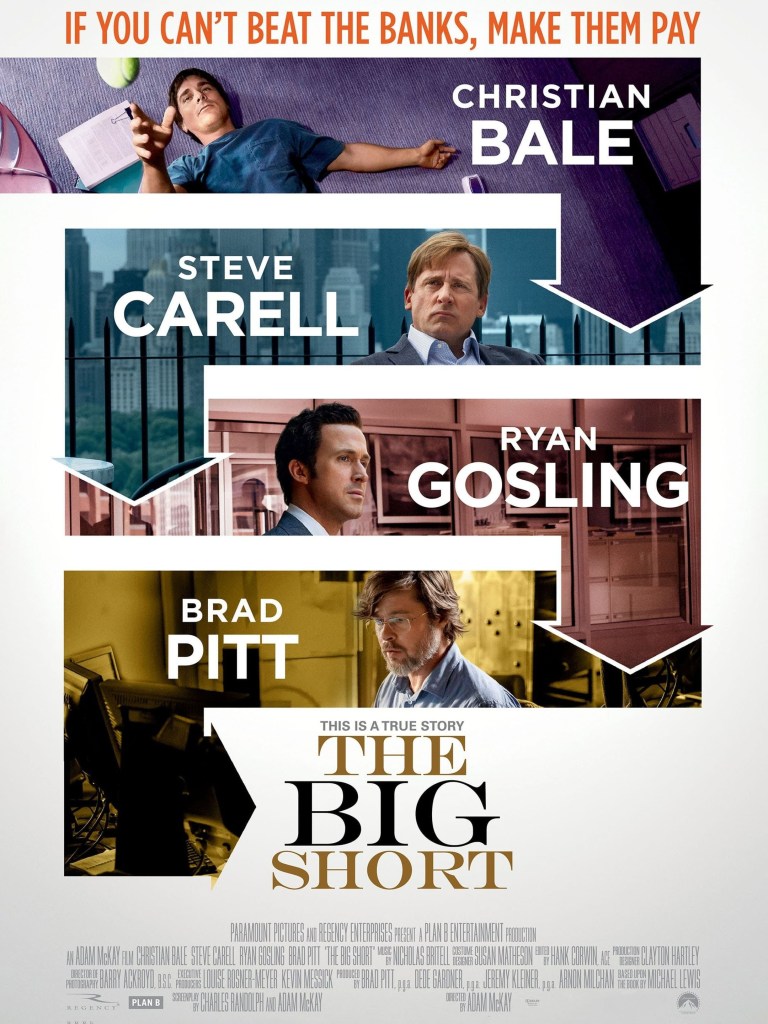
    Beneath the surface, there is a river of money flowing through a place the experts call “Shadow Easing.” It’s a mechanism as intricate and hidden as the credit default swaps in The Big Short,

    where things are not what they seem. Through something called the Genius Act, the government is inviting stablecoin issuers into the fold, encouraging them to buy short-term Treasuries. It’s a way of expanding the wallet without ever opening it in public. As the screen text in the movie reminds us:

    “Truth is like poetry. And most people fucking hate poetry.”

    This liquidity is a ghost in the machine, much like the Money Market Funds of 1971 that remained invisible to official records for nine long years. We are living in a blind spot, where the true face of inflation is hidden behind a mask of digital coins and shadow credit. It echoes the manic, deceptive energy of Belfort’s trading floor: “It’s all for naught… It’s just money; it’s made up. Pieces of paper with pictures on it so we don’t have to kill each other just to get something to eat.”

    The Housing Well and the Fed’s Hand

    In the world of real estate, the administration is digging a deep well, hoping to find a passage that bypasses the cold, distant hearts of the Federal Reserve. They have signaled a plan to order quasi-government agencies—Fannie Mae and Freddie Mac—to purchase $200 billion in Mortgage-Backed Securities. It is a direct attempt to force the mortgage rates down, a masterstroke of pressure that leaves the Fed with no choice but to pour more liquidity into the system to keep the short-term markets from seizing up. It’s a morality play of regulators and politicians, much like the one exposed in the documentary Inside Job:

    “This was not an inevitable crisis. It was a crash caused by pilot error… The guys who wrecked the train cannot get the train back on the track.”

    By forcing the Fed to respond to this artificially created stress, the administration ensures that the “pilot” continues to fly the plane exactly where they want it to go, regardless of the long-term structural damage.

    Conclusion: The Management Phase

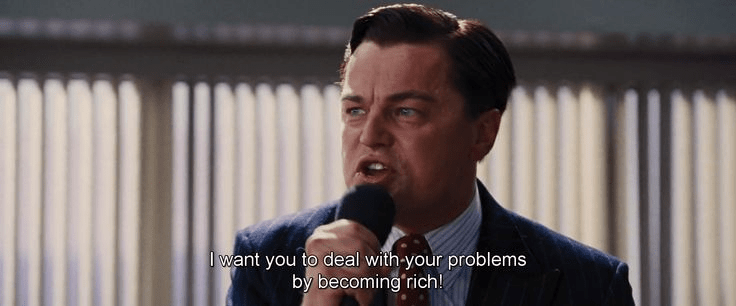
    Everything is being managed now, from the $2.5 trillion in potential banking capacity to the careful tuning of the stock market’s engine. We are in a management phase, a pre-election concerto where every note is rehearsed and every risk is accounted for. The record is spinning, the music is playing, and for a brief moment, the world feels as if it could stay this way forever. As Jordan Belfort bellows to his troops in his most desperate hour:

    “I want you to deal with your problems by becoming rich!”

    But even in the quiet hours of the night, when the numbers stop moving, the rain eventually returns to the window, revealing the things we tried so hard to hide. The wind-up bird keeps turning, and we simply wait to see what happens when the music stops.


    Disclaimer: I should tell you that I am not a financial advisor. I am just a man who watches the sunset and listens to the occasional jazz record while the numbers on the screen move in their own strange, syncopated rhythm. This world is full of mirrors and deep wells, and what looks like a solid floor today might just be a suggestion tomorrow. Before you go jumping into any dark wells or shifting your life savings into the invisible river, please consult with a professional who understands the hard, cold mathematics of this reality. I cannot be held responsible for the things that happen when the music stops and the two moons finally reveal themselves.


    SUMMERY:

    The 2026 Evaluation: The mid-term election is not just a date; it is a judgment on the aggressive policies of the administration’s first year.

    Preventing the Fall: To ensure a favorable outcome, every economic risk is being suppressed to prop up asset prices. It is a high-stakes performance, reminiscent of the 24-hour tension in Margin Call, where a system on the brink must be held together by any means necessary.

    The Genius Act and Stablecoins: Through the Genius Act, the administration incentivizes stablecoin issuers to buy short-term Treasuries, effectively expanding the government’s wallet.

    The MMF Blind Spot: This new liquidity is a ghost in the system. Just as Money Market Funds (MMFs) existed in a “blind spot” for nine years (1971–1980) before being captured in M2 supply metrics, today’s stablecoin expansion hides the true face of inflation.

    Psychology of the Market: Much like the frenetic energy in The Wolf of Wall Street, this environment thrives on the psychology of power and the expansion of “shadow credit” through DeFi ecosystems.

    Direct Intervention: A planned order for quasi-government agencies to purchase $200 billion in Mortgage-Backed Securities (MBS) aims to lower mortgage rates directly.

    Forcing the Easing: This move creates a “stress” in short-term markets that leaves the Fed with no choice but to provide liquidity (via RMPS), a masterstroke of indirect pressure. It is a morality play of regulators and politicians, much like the one exposed in the documentary Inside Job, where the public is often oblivious to the gears turning behind the scenes.

  • The morning arrives with a stillness that feels like a held breath. The sunlight is a heavy, golden syrup that clings to the palm trees, motionless and indifferent. The air is stagnant and warm, unblinking clarity. I sit by a window, watching the way the light catches the dust motes, making them look like tiny, suspended galaxies. The S&P 500 is hovering near 6,960, a number so lofty it seems to exist in a different atmosphere. It is a morning of record highs and hollow silences—Goldman Sachs and PNC have reported “blowout” numbers, yet the Dow remains flat, as if the market is waiting for a signal that hasn’t been made yet.

    The Alchemy of the Tweezer

    The market isn’t rising because the world has found its footing; it is rising because the Federal Reserve has mastered the art of the invisible mend. My thesis is that we have moved past the era of the “flood.” We are now in the age of the RMP (Reserve Management Purchases)—a precision IV drip of liquidity.

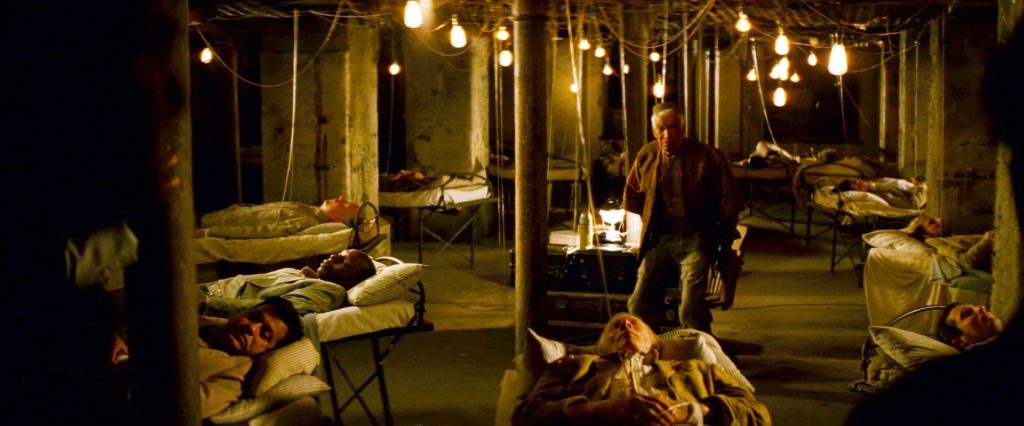
    A scene still from Inception, where the people are sleeping in the basement with the IVs attached.

    In Christopher Nolan’s Inception, there is a basement where the dreamers go to be sedated, overseen by a chemist who knows exactly how many milligrams it takes to keep the dream stable. The Fed is that chemist.

    By purchasing short-term T-bills while the Treasury keeps long-term rates tethered like a captive balloon, they have created a “tweezer” strategy. They aren’t trying to save the whole forest anymore; they are just keeping the most important trees from turning brown. It is why the 43-day government shutdown didn’t trigger a collapse—the basement was still being pumped with just enough reality-distorting fluid to keep the eyes closed and the charts green.

    The Mirages and the Machines

    In the slow-motion frames of a film like Wong Kar-wai’s Chungking Express, there is a sense of things left unsaid—the way characters move through a space where the atmosphere is thick with a longing for a future that hasn’t arrived. We are living in that space.

    GIF image from Wong Kar-wai's Chungking Express, 2 main characters hanging out at the sandwich shop

    At CES 2026 last week, the “arrangement” of our reality was revealed to be silicon and steel. Hyundai and Boston Dynamics showcased the Atlas humanoid, not as a prototype, but as a production-ready industrial worker.1 Nvidia’s Vera Rubin superchips are now the silent engines of our collective thought.

    We are told that AGI is effectively complete, a monolith of intelligence that promises a productivity miracle. Yet, Elon Musk warns of a “valley of shadows”—a 3-to-7-year transition where the labor market might freeze, leaving a generation standing in the gaps between the old world and the new. The friction is already visible. Just this morning, news from the Middle East indicates that the tension between Israel and Iran is no longer a slow burn but a sharpening edge, while the Trump administration—now a 10% stakeholder in Intel—prepares for a pivot in trade policy that could disrupt the very “precision” the Fed is trying to maintain.

    Conclusion: The Edge of the Set

    The stillness outside the window reminds me of the ending of Blade Runner 2049.

    GIF image from Blade Runner 2049 K lies on the steps as the snow falls—cold, silent, and indifferent

    K lies on the steps as the snow falls—cold, silent, and indifferent. He has protected a secret that keeps the world turning, even if that world is a dying one. We are in that same quiet transition, ensured by the Fed and the Treasury lying on the steps of the economy.

    But perhaps the more fitting image is the final moments of The Truman Show.

    Stills from The Truman Show Truman reaches the edge of his horizon and realizes the sky is just a painted wall

    Truman reaches the edge of his horizon and realizes the sky is just a painted wall. He finds the door in the blue paint and bows to the invisible audience before stepping out into the unknown.

    We are currently walking toward that wall. The market is perfect, the weather is still, and the liquidity is precise—but we are starting to see the brushstrokes in the sky.

    I finish the last of my coffee. It is entirely cold. Outside, the stillness of Los Angeles remains—an indifferent silence to the numbers flickering on my screen.

    _____________________________________________________________________________________________

    A Note Before the First Sip (hence, a disclaimer)

    Writing about the economy is a bit like trying to catch a talking cat in a dark alley—you’re never quite sure if you’re chasing a reality or a projection of your own loneliness. The numbers I’ve laid out here are as real as the ramen I’ll probably boil tonight, yet as fragile as a glass ornament in the hands of a toddler. This is not financial advice. It is simply a report from my corner of the world, where the coffee is cold and the logic is surreal. If you choose to act on these thoughts, do so with the understanding that the wind can change direction without warning, and sometimes the well is deeper than it looks.

  • The Coin in the Pocket

    I put a pot of water on the stove for spaghetti. The water takes its time. Little bubbles cling to the bottom like unspoken thoughts. Outside, the Los Angeles sky is a bruised purple, the specific color of a sun trying to punch through a layer of lingering winter haze.

    I’ve been watching the gold charts again. It’s a habit now, like checking the mailbox for a letter you know isn’t coming. The line on the screen climbs—a jagged mountain range ascending into thin air. Sixty-four percent in a year. It feels unreal. A number whispered in a dream.

    The voice from a video in the Bloomberg Youtube channel on the screen speaks of 1980. It speaks of Paul Volcker and interest rates of twenty percent. It speaks of confidence. That is a strange word to apply to money. Confidence is what you need to ask a girl to dance, or to cross a busy street without looking. For the economy, it seems, confidence is just a collective agreement not to look down.

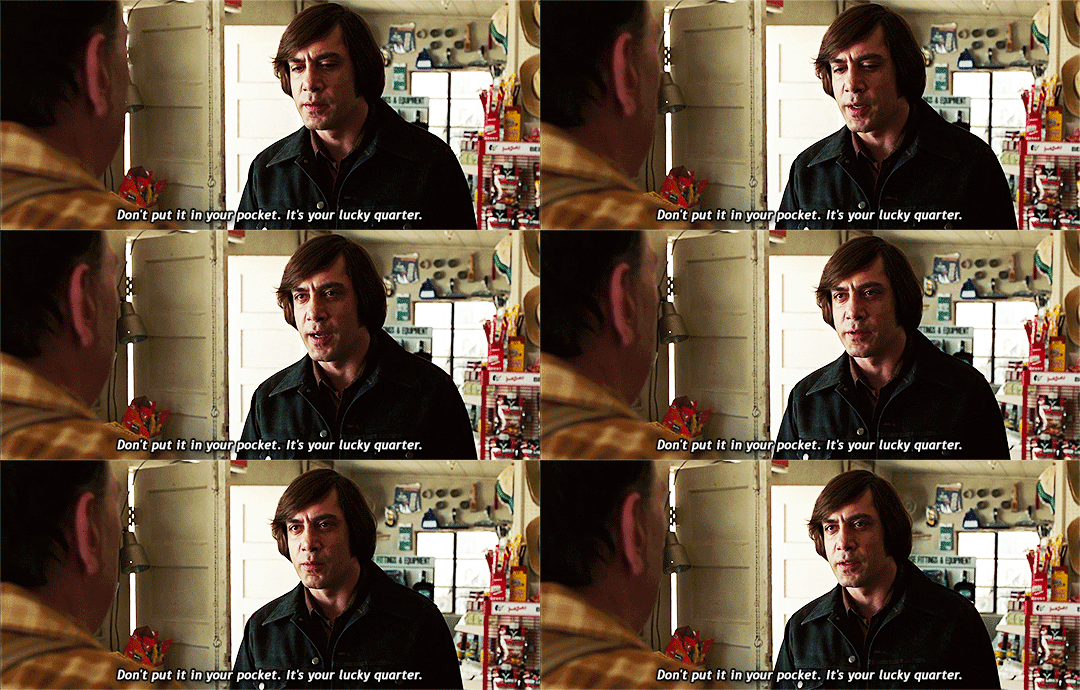
    I’m reminded of that scene in No Country for Old Men. You know the one. Anton (Javier Bardem) stands in the gas station, the fluorescent lights humming above him like trapped insects. He flips a coin.

    Cohen brother's No Country For Old Men Movie Poster featuring Javier Bardem, Josh Brolin, Tommy Lee Jones.

    “Call it,” he says.

    The old man behind the counter is terrified. He doesn’t know what he’s betting. He thinks it’s just a quarter. But Anton tells him the coin has been traveling twenty-two years to get there. It has seen pockets and registers and hands, and now it is here, spinning in the air, deciding everything.

    Gold is like that coin. It has been traveling for thousands of years, heavy and silent, waiting for us to call it.

    In 1980, the coin landed on heads. Confidence returned. The dollar flexed its muscles, and gold retreated into the shadows. In 2011, it landed on heads again. The inflation we feared never walked through the door.

    But now? The water on the stove is boiling—a rolling, chaotic sound. The analyst says the conditions are different. The debt is a mountain taller than the gold chart. The interest rates are negative, a ghost of what they used to be. The coin is spinning in the air, and it hasn’t landed yet.

    I look away from the jagged peaks of the chart and open the local news. I need something real, something that isn’t just a line on a graph.

    I find a story from yesterday, January 14th. It’s about a park up in Altadena—Loma Alta Park.

    The Board of Supervisors just approved four million dollars to build a new teen center there. It’s a small thing in the grand scheme of global finance, but the article mentions something else. It says that when the Eaton Fire tore through the area last year, destroying so much, Loma Alta Park somehow refused to burn. It stood there, a green island in the ash, untouched.

    And now, instead of hoarding that luck, they are building something on it. A place for teenagers to “just be,” to escape the isolation of their screens and the smoke. The county isn’t buying gold bars with that money; they are buying shade structures, walking paths, and a safe room for kids to talk to each other.

    It brings a smile to my face. A small, quiet thing, but enough.

    We spend so much time worrying about the crash, about the moment the coin hits the counter. We worry that our lucky quarter will get mixed in with the change in our pocket and become just a coin again. But then you read about a park that wouldn’t burn, and the people who decided to plant seeds in the ashes.

    Maybe the crash isn’t the end. Maybe it’s just the fire burning down the fence so you can see what actually remains—and what is worth rebuilding.

    I drop the spaghetti into the water. It fans out, then softens, surrendering to the heat.

    “Don’t put it in your pocket,” Anton warns the old man.

    I turn off the screen. I drain the pasta. The steam rises, vanishing into the purple twilight. The gold is just metal. The coin is just a coin. But the park, and the dinner, and the air in your lungs—that feels like the wealth that counts. Perhaps the wealth for the mind.

    _______________________________________________________________________________________________

    Disclaimer: I am not a financial advisor. I do not own a crystal ball, nor do I have a direct line to the people who turn the great gears of the economy. I am just a person sitting at a kitchen table, watching the light fade and boiling water for pasta.

    The words written here are merely thoughts arranged in a specific order, like jazz records on a shelf. They are not instructions. They are not a map to treasure or a shelter from the storm. The markets are a living, breathing creature, indifferent to your hopes and certainly indifferent to mine. If you decide to wager your coin based on what you read here, remember that you are the one standing at the counter, and you are the one who must make the call.

    Please, trade carefully. And never bet more than you can afford to lose to the wind.

  • The Pastel Laboratory and the Silver Ladder

    Date: Sunday, December 21, 2025

    Subject: Hims & Hers Health, Inc. ($HIMS)

    hims & hers company logo

    Status: $35.55 (Market Close, Dec 19)

    I. The Incognito Night

    It was a dark and stormy night. Not in the way a Victorian novelist would describe it, with thunder rattling the windowpanes, but in the modern, digital sense. The storm was silent. It raged inside the fiber-optic cables buried beneath the ocean, a tempest of desperate, lonely signals.

    Andrew Dudum sat at the center of this silence. He was not a doctor; he was a cellist turned venture capitalist, a builder within the sterile glass walls of Atomic Labs. The idea did not come to him in a boardroom, but at a dinner table. His sister had cornered him, criticizing his “ashy” skin and tired eyes, slamming a $300 bag of women’s skincare products onto the table. “Why,” she demanded, “do men treat their bodies like rental cars?”

    He realized then that men were not afraid of death; they were afraid of the mirror. At 2:00 AM, the search queries poured in like rain into a deep well: hair loss, erectile dysfunction, performance anxiety. They were searching in “Incognito Mode,” hiding their vulnerabilities in the grey fog of the internet.

    Dudum understood that he shouldn’t sell them medicine. Medicine is cold and clinical. He needed to sell them permission. He took the shame—that heavy, wet stone in the stomach—and wrapped it in beige serif fonts and pastel cardboard until it felt like a lifestyle choice. He called it Hims. And for a long time, the silence was profitable.

    II. The Silver Ladder (Gattaca)

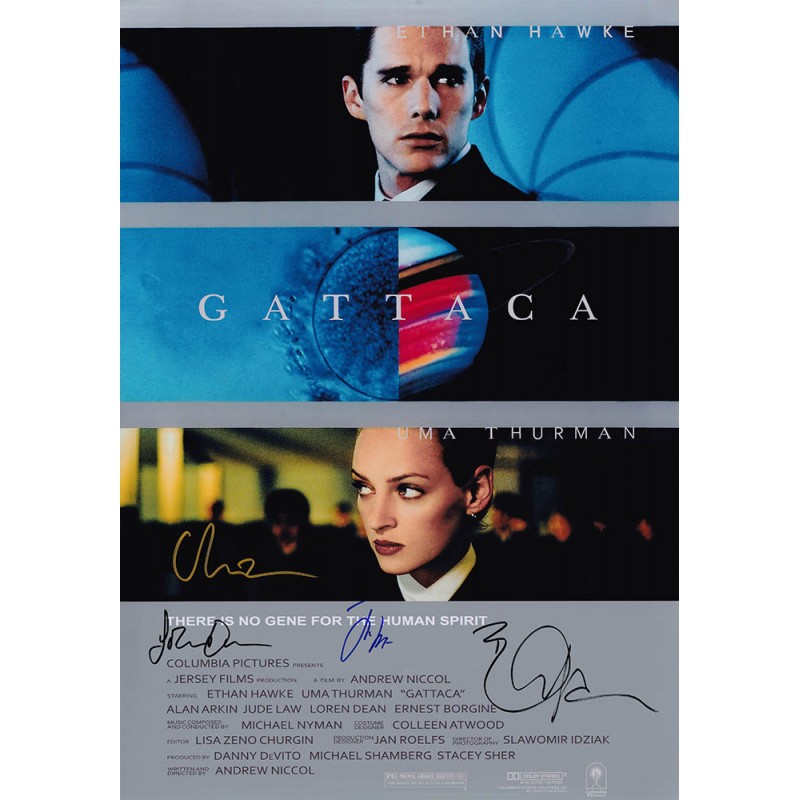
    There is a film from the late 1990s called Gattaca that explains Hims & Hers better than any financial report.

    GATTACA movie poster

    In the movie, society is divided into the “Valid” (genetically perfect) and the “In-Valid” (those born with flaws, with hair loss, with heart defects). The protagonist, Vincent, is an “In-Valid” who dreams of going to the stars. To do so, he must scrub away every trace of his imperfections—his loose skin, his stray hairs—and assume the identity of a perfect specimen named Jerome.

    Hims is the machine that allows Vincent to become Jerome. When Dudum looked at the market, he didn’t just see patients; he saw millions of Vincents trying to “pass” in a world obsessed with optimization. The “Incognito Mode” searchers didn’t just want pills; they wanted the “Silver Ladder”—the DNA sequence of a better self.

    By offering hair regrowth, skin correction, and metabolic optimization (weight loss), Hims wasn’t just fixing medical issues; it was selling the “Valid” status. It was selling the ability to walk into a room and feel like you belonged to the genetic elite. The company’s recent pivot to “Hims Labs” and “Longevity” is the final act of this movie: we are no longer just fixing the broken; we are engineering the perfect.

    III. The Chorus of the Oracles (The Bull and The Bear)

    But a company is not a movie; it is a creature that must be fed. As Hims grew, the high priests of the market began to argue over its soul.

    From the high towers, the Bears gathered, their voices heavy with skepticism.

    • The Sceptics at Bank of America looked down and saw a fragile thing. They warned that the “compounding loophole” for GLP-1 drugs—the gold dust of 2024—was closing. They pointed to Amazon, the great white shark in the water, launching its own “One Medical” clinics. “There is no moat here,” the Bears chanted. “Only a generic drug store wearing a fake mustache.” They argued that once the FDA declared the drug shortages over, the Hims empire would dissolve like sugar in hot tea.

    But from the other side, the Bulls sang a different song.

    • The Believers at Piper Sandler and Jefferies looked at the same creature and saw a fortress. “It is not about the drug,” they argued. “It is about the relationship.” They pointed to the retention numbers, the sticky sweetness of the subscription model. They argued that Dudum had successfully pivoted from a middleman to a “Personalized Health Platform.” To them, the ability to mix custom dosages (titration) was a luxury service that Amazon’s cold algorithms could not replicate. They saw a price target of $50, glowing in the distance like the green light at the end of Gatsby’s dock.

    IV. The Battle of the Titans (The Failed Treaty)

    The year 2025 was not a gentle year. It was the year the Empire struck back.

    For months, Hims had been selling the “compounded” version of the magic weight-loss drugs for $199, a price that felt like a rebellion against the $1,000 toll charged by the Pharmaceutical Giants.

    In April 2025, Dudum attempted a daring diplomatic maneuver—a Trojan Horse strategy. Hims announced a “partnership” with Novo Nordisk, agreeing to sell the branded Wegovy alongside their compounded generic. It looked like a truce. The market cheered. But the Giants are not interested in truces; they are interested in dominion.

    On June 23, 2025, the trap snapped shut. Novo Nordisk abruptly terminated the deal, issuing a statement that read less like a corporate memo and more like an excommunication. They accused Hims of “deceptive promotion” and selling “illegitimate knockoffs.” They slammed the gates of the castle. The stock crashed 34% in a single morning.

    Then came the second blow. On September 9, 2025, the FDA—pushed by the relentless lobbying of the Giants—sent a formal Warning Letter to Dudum’s desk. They flagged the marketing. They attacked the use of the phrase “same active ingredient.”

    It was a coordinated squeeze. The legal supply was cut (Novo), and the regulatory air was poisoned (FDA). Hims was alone in the ring, bruised and bleeding, with the crowd waiting for the knockout.

    V. The Metamorphosis (The Netflix of Blood)

    Most companies would have withered here. They would have accepted their fate as a cautionary tale. But Dudum, channeling the spirit of Gattaca, decided that if he couldn’t join the Valid, he would build his own definition of validity.

    In the quiet months of late 2025, while the market wrote his obituary, Hims bought the means of production.

    • The Factory: They acquired a peptide manufacturing facility in California. If they couldn’t buy the drug, they would brew their own “silver ladder.”
    • The Lab: On November 13, 2025, they launched “Hims Labs.” For $199 a year, they analyze your blood.

    They stopped trying to just sell the drug; they began to build a “Netflix for the Body.” Just as Netflix uses data to recommend the next show, Hims uses your blood data (cholesterol, testosterone, sugar) to recommend the next subscription. By shifting from “copies” of Wegovy to “Personalized Treatments” (custom titrations based on bloodwork), they moved the battlefield from Patent Law to Medical Necessity.

    They are no longer selling weight loss; they are selling the maintenance of the machine.

    VI. The Quiet Hum of the Present

    Now, it is December 21, 2025. The stock sits at $35.55.

    The “mess” of the FDA warning letters is still there, filed away in a cabinet. But the machine is humming. The company claims 2.5 million subscribers, and 64% of them are on “personalized” treatments—cocktails mixed specifically for their own biology.

    Andrew Dudum sits in the center of it all, the conductor of a silent orchestra. He has built a world where the doctor, the pharmacist, and the lab technician are all the same app on your phone. It is a complex system striving to survive, turning the darkness of a 2:00 AM search into a recurring monthly revenue stream.


    A Note on the Nature of Reality (Disclaimer): The numbers on the screen are merely shadows cast by a fire we cannot see. The stock market is a collective dream, and your portfolio is a paper boat floating on a deep, unknowable ocean. Do not mistake the map for the territory. Do not mistake the reflection for the moon. Invest only what you are willing to lose to the wind.

  • PJ Day on Wall Street: Finding Comfort in Uncertain Reality

    I. The Flimsy Chaos

    It was a busier morning than I expected today. Maybe it was because of the last day of school. Maybe I was trying a bit too much to prepare snacks and lunches, aiming for a perfection that no one asked for. There was a point where I almost ruined the morning by letting my frustration spill over, a sharp word ready to launch.

    Then, I stopped.

    I stopped doing everything for exactly three seconds. The kitchen was a hell of a mess—open jars, scattered crumbs, half-packed bags. But in those three seconds, which might have been wasted on an emotional letdown, I used the silence to turn around. I looked away from the flimsy, unimportant chaos and refocused. And there it was: PJ Day.

    The kids were standing there in their baggy pajamas, excited to go to school. Their excitement was the only real thing in the room. My “trouble” from three seconds ago, which felt like the whole world throwing knives at me, suddenly seemed like a joke. The snacks were packed. The sun was coming out early, far from the damp and foggy mornings of the past few days.

    I realized I didn’t need to fight the chaos; I just needed to tune it out.

    II. Clear the Mechanism

    It reminded me of the pivotal scene in Sam Raimi’s film, For Love of the Game.

    For The Love Of The Game Movie Poster

    Billy Chapel, the aging pitcher played by Kevin Costner, stands on the mound at Yankee Stadium. The crowd is screaming, the hecklers are vicious, and the pressure is suffocating. He is in the middle of a perfect game, but the noise is deafening.

    Then, he says: “Clear the mechanism.”

    Suddenly, the sound drops out. The crowd blurs into a soft, static gray. The only thing left is the catcher’s mitt. The noise is still there, but it no longer touches him.

    Watching the financial news this morning, I felt the same need to “clear the mechanism.” The screen was filled with the screaming fans of the financial world—the bears, the bulls, the political analysts—all shouting about the “Money Printer,” the debt, and the coming crash.

    III. Clearing the Mechanism: The Signal in the Static

    I turned on the screen to watch a financial analysis segment on Yahoo Finance. The analyst on screen was sharp, cynical, and undeniably compelling. He wasn’t celebrating the news; he was dissecting it with a surgeon’s cold precision.

    He pointed to the November CPI (Consumer Price Index) headline number of 2.7% and the Core CPI of 2.6%. To him, these numbers were a “wild fantasy.” He argued passionately that the Federal Reserve has quietly turned the “money printers” back on—to the tune of $40 billion a month—masking the real devaluation of currency. He was the heckler in the stands, shouting, “The game is rigged!.”

    I respected his view on the “money printer” logic. But as I watched the green tickers slide across the bottom of the screen, I chose to “clear the mechanism.” While the analyst saw a lie, I saw a permission slip. The market doesn’t care about the morality of the money supply; it cares about the rules of the game for today. And just like I ignored the mess in the kitchen to focus on the kids, the market is ignoring the noise to focus on the specific opportunities on the field:

    • The “Widowmaker” Blinks (Bank of Japan): Overnight, the Bank of Japan raised rates to 0.75%, a 30-year high. The crowd screamed (briefly), fearing a collapse of the Yen carry trade. But the market cleared the mechanism. The Nikkei absorbed the hit. The global system didn’t break. The “chaos” turned out to be flimsy.
    • The Weak Links (Nike & FedEx): Nike (NKE) is the cautionary tale, down 10% this morning due to a 17% drop in China sales and tariff woes. FedEx (FDX) beat on revenue but missed on margins. These are the “messy counters” in the kitchen—real problems, but contained.
    • The AI Resurrection (Nvidia, Oracle, Micron): While Nike stumbled, the AI sector decided to fly. Nvidia (NVDA) is up 3.5% ($179.80) on rumors of relaxed China export rules (H200 chips). Oracle (ORCL) is surging 8% on reports of a joint venture with ByteDance (TikTok). Micron (MU) is up another 7% today, still riding the “sold out through 2026” narrative. The message is clear: The AI trade isn’t dead; it was just reloading.

    IV. Conclusion: The Sun Comes Out

    I finished packing the lunches and we walked out to the school. The street was already filled with other families, a parade of plaid flannel, onesies, and fuzzy slippers moving toward the school gate. There was a collective lightness in the air, a shared permission to let go of the stiff rules of the week.

    The market today feels exactly like this PJ Day. It isn’t messy; it is comfortable. It has decided to stop wearing the tight, uncomfortable suit of “Macro Fear” and slip into something that feels good. The mess in the kitchen—the Nike earnings, the FedEx margins—is still there, behind the closed door. But out here, in the sun, the AI stocks are running free.

    As I watched my kids merge into the sea of pajamas, laughing with their friends, I realized that the “mess” doesn’t disappear, but it also doesn’t have to define the day. The 2.7% CPI is the sunlight. The 3.5% gain in Nvidia is the permission to relax.

    We can stay in the kitchen and stare at the crumbs, or we can step outside and enjoy the comfort.

    I choose the comfort for today. Because from tomorrow, the winter break is on. No more comforts for the next two weeks.


    Market Snapshot (Morning, Dec 19, 2025):

    • CPI: 2.7% (Cooler than expected).
    • Nvidia: Up 3.5% on China export hopes.
    • Oracle: Up 8% on TikTok JV news.
    • Nike: Down 10% on China weakness.
    • Sentiment: Clearing the noise, focusing on the soft landing.

    Disclaimer: Invest with a clear head. The crowd is always screaming about something.